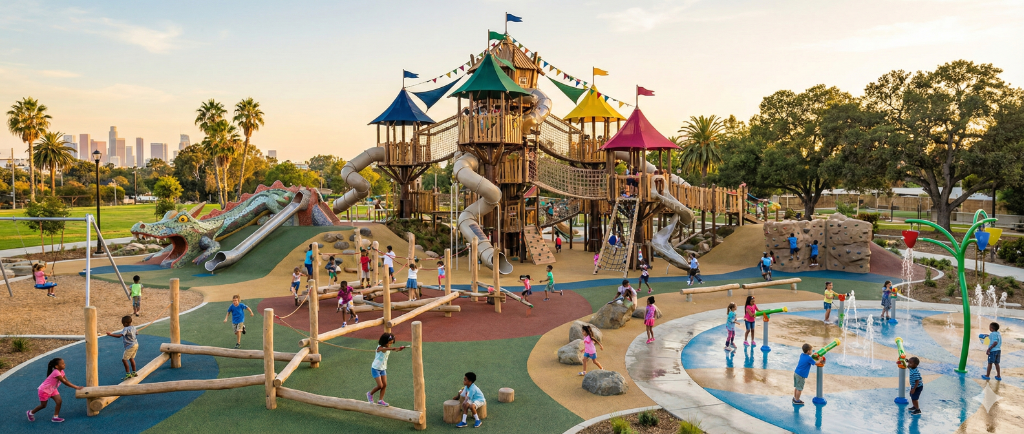
A playground is designed for play. There is a difference between acceptable challenges and hazards, such as protruding bolts or broken chains. A playground risk assessment is the process of identifying these hazards and documenting actions. Certification from SGD600. ## Why Risk Assessment Matters. A documented assessment helps prioritise maintenance budgets. ## How Often Should You Assess? Routine visual inspections: Regularly. Operational inspections: Periodically. Annual main inspections: Annually. Post-installation inspections: Following installation. ## What a Risk Assessment Covers. - Equipment Condition: Identifying cracks or corrosion. Equipment from SGD350/sqm. - Surfacing: Testing impact attenuation adequacy (EN 1177). EPDM from SGD90/sqm, while concrete from SGD100/sqm. - Entanglement & Entrapment: Checking gaps for traps (SS 457 and EN 1176). - Fall Zones & Clearance: Ensuring adequate surfacing extent and clearance. - Accessibility: Ensuring ground-level play features are available. - Environmental Hazards: Monitoring for debris. Disposal from SGD3.50/sqft. ## Associated Facility Maintenance. For surrounding amenities, floor ceramic from SGD9/sqft, porcelain from SGD12/sqft, and stone from SGD22/sqft. Pool ceramic from SGD14/sqft, porcelain from SGD20/sqft, and glass from SGD28/sqft. Waterproofing from SGD6/sqft, removal from SGD4/sqft, polishing/grouting from SGD9/sqft, and epoxy grout from SGD4/sqft. ## Who Should Assess? Routine visual checks may be conducted by facility staff. Annual main inspections should be carried out by a competent person with experience regarding SS 457 and EN 1176 for equipment, and EN 1177 for surfacing.
Kinderbuild Team
Singapore's trusted playground contractor with over a decade of experience delivering SS EN1176-compliant installations across schools, condominiums, and public parks.